Public Policy Researcher Dr Carys Moseley explains the widespread implications of the acquittal of ex-gay Christian Matthew Grech
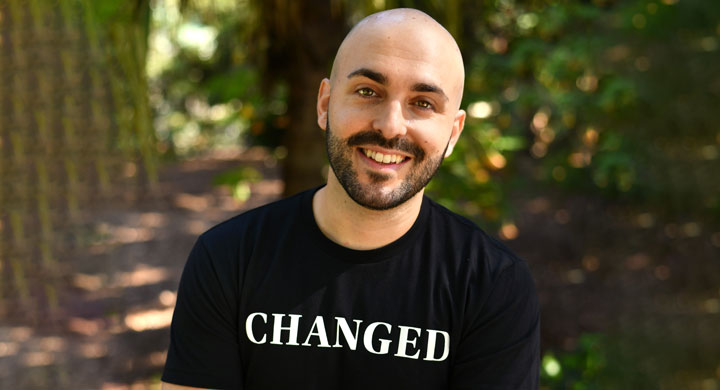
This Wednesday 4 March 2026, ex-gay Christian man Matthew Grech was acquitted by the Malta Magistrates Court of advertising conversion practices on Maltese television. Journalists Mario Camilleri and Rita Bonnici were also acquitted. Matthew Grech was assisted by Maltese lawyer Jeanise Dalli and the Christian Legal Centre.
The ruling has implications not only for the implementation of the Maltese law banning conversion practices, passed in 2016, but for similar laws passed in other countries since then.
Pan-European targeting by the Malta Gay Rights Movement
Activists from the Malta Gay Rights Movement (MGRM) filed reports with the Maltese police about an interview Matthew Grech did on PM News, a private Maltese television channel, less than a month after it was broadcast on 6 April 2022. The three activists were Silvan Agius, Christian Attard and Cynthia Chircop.
Silvan Agius was an expert in the cabinet of Helena Dalli, the European Commissioner for Equality. Christian Attard was and still is a lawyer in the European Commission. Cynthia Chircop was at the time co-leader of the MGRM. It is evident that the case was brought to create a precedent across the European Union.
From ‘marketing exercise’ to retrospective accusation of advertising
Cynthia Chircop’s accusation is the most significant for this case. Chircop told one of the many court hearings that the television video had ‘triggered emotions’ she felt as an adolescent, regarding isolation. Her argument was that the television programme functioned as a ‘marketing’ exercise for the International Federation for Therapeutic and Counselling Choice (IFTCC), with whom Matthew Grech was linked.
However in the June 2023 hearing, the accusation that the programme amounted to a marketing exercise was changed to one of advertising conversion practices. This accusation was made by Silvan Agius, who presented himself to the court as ‘a victim’, accusing the television presenters of having given Grech a platform to ‘advertise conversion practices’. In fact, Agius’ accusation made no legal sense as it was retrospective.

Maltese government rushed amendment to frame Matthew Grech
Silvan Agius nearly got away with this mendacious nonsense because in January 2023, the Maltese government rushed through an amendment to the 2016 law criminalising ‘advertising’ conversion practices. That same month, Gabi Calleja, who used to run MGRM with Silvan Agius, had the affrontery to tell the Maltese press that this was being done precisely because the police had not been able to respond to previous accusations!
Gabi Calleja’s argument was fundamentally hypocritical. For in 2019 she herself had been interviewed on another Maltese television channel debating Matthew Grech on the same topic. Should she too have been retrospectively charged with being an accomplice to a criminal act?
Judge finds against retrospective application of amendment
Thankfully in March 2026, Magistrate Vella stated in her judgment that the application of the definition of advertising from January 2023 was invalid. For it would breach the fundamental principle against retrospective application of the criminal law to the detriment of the accused after the fact.
Sharing a personal experience and testimony not illegal
The judgment is very clear. Matthew Grech was well within his rights even under the Maltese law to share a personal life experience and testimony. He was even allowed to share an experience of alleged change in sexual orientation without professional help, as this did not count as advertising conversion practices.
Rational discussion not illegal
Further, Magistrate Vella on the one hand upheld the law, but on the other said that the court
“has great difficulty in considering as a criminal offence a rational discussion that takes place not only on this particular subject but on any subject whatsoever.”
This is very important, as it is clear that had the accusations been upheld, freedom of speech in Malta would have been profoundly affected. Indeed had the accusations been upheld, that would only have encouraged campaigns in other European countries to pass conversion practices bans in law.
Exploratory therapy not illegal
The judge also ruled that exploratory and consensual therapy of the type that Matthew Grech was discussing in the 2022 interview was not illegal. She said that “as long as there is no service or therapy that is forced upon a person it cannot result in a crime.” This is a very significant concession. She further pronounced that it was not proven that “the services provided by the associations mentioned in the program are services that can fall under prohibited conversion therapies by law.” This means that talking therapies aimed at helping someone who wants to be helped with unwanted sexual attractions are not illegal in Malta.
Mike Davidson, the chairman of the IFTCC, said after the verdict that
“individuals must be free to speak about their own lived experience without fear of criminal sanction. We remain committed to upholding professional standards, lawful dialogue, and careful engagement on matters that are often deeply personal and complex.”
Freedom of religion upheld
Magistrate Vella also upheld the freedom of religion in her judgment. She found that individuals in Malta had the right to speak of and promote their religious beliefs, of whatever religion. This necessarily included Matthew Grech as a Christian.
This is of fundamental importance, as expression of belief is not the same as sharing personal experience.
Judge held that the law protects everyone
In a masterstroke of legal argument, Magistrate Vella took the view that the 2016 Maltese law applies to everyone not only self-identified LGBTIQ people. This is what she said:
“This court considers that the greatest mistake one can make is to automatically jump to the conclusion that the law, as promulgated, exists solely for the protection of only one segment of our society, namely all those persons who identify as LGBTIQ.
“If that had been the case, what would happen? Would persons who identify as heterosexual seek prosecutions against any presenter who invites individuals identifying as LGBTIQ to speak about their personal experiences on television programmes, social media platforms, newspapers, and so on.”
In other words, Magistrate Vella warned that a punitive approach to speech by one group of people would inevitably be used by others likewise. A lesson worth exporting to all jurisdictions.
Judicial processes should not be used as punishments
Speaking after the verdict, Matthew Grech said that the process of the court case being dragged on for three years had in itself been a punishment for a crime he never committed.
“Over these past three years, the process itself became the punishment. I endured emotional strain, reputational damage, financial cost, and constant uncertainty. No one should have to live under the weight of criminal charges simply for exercising their right to free speech.
“Today’s decision is not just a personal vindication it is a reaffirmation of a fundamental principle: speaking about one’s lived experience, including the transforming power of Christ, is not a crime. That this should happen in Malta with the support of the wider European political network should be a warning to the world.”
The case should have been thrown out from the outset
All this should have been very obvious from the start. Indeed, as it became evident that the entire accusation by Silvan Agius, Christian Attard and Cynthia Chircop was based on retrospective application of the advertising amendment, the case should have been thrown out of court by the judge as soon as it was brought. The question then is, why was the case not thrown out? Is there something about the criminal justice system in Malta that ensured that the rule of law was not adhered to strictly enough? Why was this process-as-punishment allowed to go on for three years?
Parliamentary Assembly of the Council of Europe must revisit its resolution
This whole business of the retrospective application of the advertising amendment has massive implications for bills intended to ban conversion practices across the Council of Europe now. At the end of January this year, the Parliamentary Assembly of the Council of Europe debated and passed a resolution to ban conversion practices across member states including the United Kingdom. The resolution hailed the 2016 Maltese law as a ‘success story’, and tacitly leaned on the advertising amendment aimed at Matthew Grech as a basis for bans.
This resolution was brought forward by a sitting Labour MP, Kate Osborne, who is Rapporteur on Equality and Non-Discrimination in the Council of Europe. Her reliance on a wrongful application of the law surely leaves the resolution without legal foundations. This means that the Parliamentary Assembly of the Council of Europe must now revisit its resolution.
Revoke Maltese law to protect Christian freedoms
What this case shows is that the Maltese law of 2016, the first law of its kind in Europe if not the world, is unworkable. Even its strongest supporters had to rush through an amendment during the court case to try to prosecute Matthew Grech successfully. This was an act that fundamentally undermined the rule of law in Malta. It also showed that the Maltese law is unworkable.
Matthew Grech went further. He called on the government of Malta to revoke the 2016 law banning conversion practices. He said:
“The law must never be weaponised to silence lawful Christian testimony … Today’s decision is not just a personal vindication it is a reaffirmation of a fundamental principle: speaking about one’s lived experience, including the transforming power of Christ, is not a crime. That this should happen in Malta with the support of the wider European political network should be a warning to the world.”
No country should follow Malta’s example
This appears to be the first case of someone being prosecuted for a conversion therapy offence anywhere in the world. It is shocking that Matthew and two journalists had to endure three years of legal battle, including 17 court appearances. They have rightly been cleared of any offence, but this case shows how draconian, invasive and intolerant such laws and the activists behind them are. Lessons should be learned around the world. Banning ‘conversion therapy’ will only serve to criminalise certain types of conversations. No country should follow Malta’s example here.
Find out more about Matthew Grech