There have been very mixed results this week in the House of Lords in terms of its supporting life at its most vulnerable.
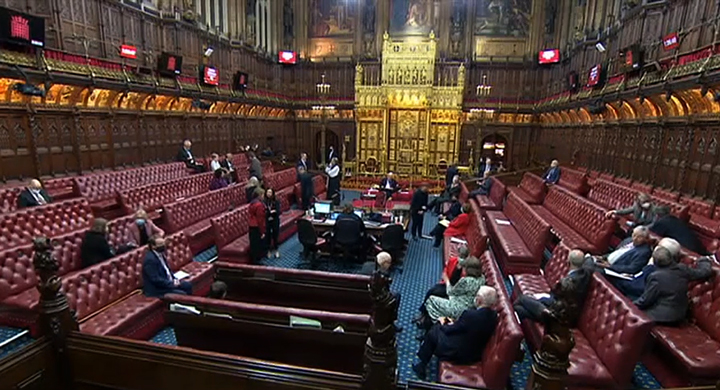
Two amendments to the Health and Care Bill, which is currently making its way through Parliament and was debated last night at its third reading in the House of Lords, sought to legalise assisted dying (amendment 170), and to make DIY abortion permanent (amendment 183).
Assisted suicide defeated
Lord Forsyth’s amendment 170, aimed to compel the government to bring forward a bill “to permit terminally ill, mentally competent adults legally to end their own lives with medical assistance”. This was rightly rejected by 179 to 145 votes.
Many Lords spoke against the amendment for being unconstitutional, but others, like Baroness Finlay of Llandaff questioned the level of public support for the change:
“I would, though, like to challenge the claim that there is overwhelming support among the public. I think it is questionable. In the poll, when asked a bit more detail, 57% of the public did not understand what assisted dying is; 42% think it is your right to stop treatment, which is already a legal right; and 10% think it is hospice care. Dignity in Dying has said it wants to have the largest record of public support, yet to date it has less than 0.5% of the population of England and Wales signed up to this list. So I do think we have to look at some of the claims being made and think about them.”
This represents a major upset to the assisted suicide lobby, which hoped to win the vote. Thankfully, it shows that the Lords are unwilling to force the government to legislate on a highly contentious issue.
DIY abortion could be made permanent
However, Baroness Sugg’s amendment 183, which sought to “maintain the existing provision of at-home early medical abortion following a telephone or video consultation with a clinician,” was shockingly passed after 1am by 75 votes to 35 votes against.
This is despite the government’s recent announcement on 24 February that the policy would be coming to an end on 29 August 2022.
Baroness Eaton pointed out to the House:
“I feel … perplexed as to why the amendment tabled by the noble Baroness, Lady Sugg, seeking to override the Government’s decision to end the temporary policy on at-home abortion would garner any serious consideration, given that it would contradict the aims of the Health and Care Bill by placing the health and safety of women and girls at risk. It also distracts from important matters in the Bill, for which the Bill was intended.
“The provision allowing at-home abortion made alongside a host of other Covid regulations during an unprecedented global crisis was only ever meant to be temporary alongside almost all other temporary provisions of the Coronavirus Act that the Government are expiring or have already expired.”
Similarly, Lord Alton pointed out that this was not the time or place to be discussing such big amendments to health and social care:
“Here we are at almost midnight. This issue has never been debated at any stage in another place in the elected House. Rather like Amendment 170 that we discussed earlier, we have to consider how we resolve sensitive and controversial ethical issues of this kind. There was no consideration of this question in the elected House, and it has come to us without being considered in Committee but at the fag end of Report stage. Surely all of us can agree, wherever we come from on the more substantive point, that this is not the way to go about parliamentary business.”
However, despite some helpful speeches from a few peers, speaking up for vulnerable women and standing to protect life, the amendment ended up being voted through at 1.04am.
Battle in the House of Commons
The Health and Care Bill will now return to the House of Commons where MPs will have an opportunity to vote on this amendment.
But the battle doesn’t end here.