The Court of Appeal has ruled it was illegal for St Helier Hospital to withdraw life‑sustaining dialysis from 68‑year‑old Robert Barnor on 11 February 2026, despite the objections of his family and without seeking the court’s approval.
While the judgment resolves a major legal controversy, confirming that life-and-death “clinical decisions” to refuse further treatment still need approval from the Court of Protection, it came too late for Mr Barnor. He died on the morning of 27 February, only hours before a judge was due to decide whether dialysis should be urgently reinstated.
Meanwhile in the Court of Appeal, Lord Justice Newey, Lady Justice Asplin and Lord Justice Baker have ruled that, absent a full agreement between all doctors and the entire family, the Court’s permission is always required before the NHS can lawfully withdraw or refuse life-sustaining treatment.
Giving the unanimous judgment of the Court, Lord Justice Baker declared: “The hospital cannot pre-empt court proceedings by unilaterally withholding or withdrawing treatment on “clinical” grounds.”
He added: “The course taken by the Trust in this case was contrary to established principle and practice articulated in the case law, the Code of Practice, and guidance.”
The judgment states: “Any decision about the care and treatment of a mentally incapacitated adult, including the withdrawal of life‑sustaining treatment, must be taken in the patient’s best interests. There is no carve out for ‘clinical decisions’.”
Advised to use ‘clinical’ label to avoid Court’s scrutiny
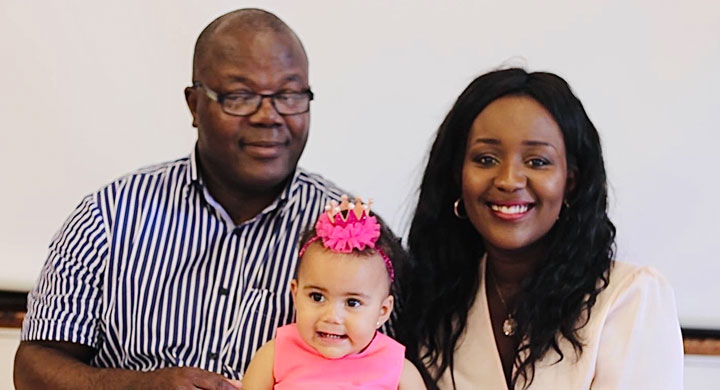
Mr Barnor was taken to hospital on 7 April 2025 after his son and his daughter found him collapsed and unconscious at home following a stroke.
He made some recovery and was successfully weaned off a life support machine, but due to kidney failure caused by pre-existing diabetes, remained dependent on dialysis provided twice a week.
According to the evidence given to the courts, Mr Barnor’s condition continued to improve and his family often saw him awake and responsive. His daughter described him as tracking the family and nurse with his eyes, squeezing his wife’s hand, responding to requests that he squeeze it harder, blinking on request, reacting to music, and pointing when he wanted help. Mr Barnor’s daughter explained how the family initially took video recordings of his movements and shared them with the doctors, but filming at the ICU was then banned by Epsom and St Helier University Hospitals NHS Trust.
The Trust disagreed with the family that Mr Barnor’s treatment should continue and argued it was in his best interests to die. The Trust and the family agreed to meet in mediation this February in an effort to resolve their dispute.
The documents considered by the Court of Appeal at the hearing last week record the advice given to the Trust by Professor Lynn Turner-Stokes, the National Clinical Lead for prolonged disorders of consciousness, in November 2025. Professor Turner-Stokes advised the Trust to refuse Mr Barnor’s life-sustaining treatment as a unilateral “clinical decision” and to avoid making reference his “best interests”, as the matter would mean the dispute with the family had to be resolved in court.
Professor Truner-Stokes advised to record decisions to refuse treatment as made by a “multidisciplinary team” (MDT) “so that no single individual finds themselves responsible for a decision”.
Without ever seeing the patient or considering his medical records, Professor Turner-Stokes recommended that the Hospital’s records should be “amended” to change Mr Barnor’s diagnosis from “minimally conscious state” to “terminal decline of consciousness” so as to avoid the need for “detailed assessment and prognostication” required in the clinical guidelines which apply to minimally conscious state.
In late January 2026, the central line through which dialysis was provided became blocked, and the doctors inserted a temporary line for short-term use.
On 11 February, Epsom and St Helier University Hospitals NHS Trust informed the family via solicitors that it would stop providing dialysis with immediate effect. The Trust argued that, as this was a “clinical decision”, it was unnecessary to obtain permission from the Court of Protection before stopping life-sustaining treatment and there was nothing the family could do about it. The solicitors’ letter stated:
“Without dialysis, Mr Barnor is expected to die from complications of kidney failure within days.”
The legal battle
Supported by the Christian Legal Centre, the family made an urgent application to the Court of Protection for a declaration that continuation of treatment was in Mr Barnor’s best interests. However on 17 February the Vice President of the Court, Mrs Justice Theis, refused permission to bring proceedings on the grounds that the Court had no power to interfere with clinical decisions. The family appealed.
Following a hearing on 23 February 2026, the Court of Appeal allowed the family’s appeal and remitted the case to another judge for an urgent hearing to determine whether re-starting dialysis was in Mr Barnor’s best interests.
The proceedings were subject to draconian reporting restrictions, anonymising Mr Barnor and all members of his family, which were only relaxed after Mr Barnor’s death, finally enabling the family to discuss the case publicly.
This must not happen again
Lesley Barnor Townsend, Mr Barnor’s daughter, said:
“It was a profound shock for the family to see the NHS’s so-called end-of-life care in action. My father used to tell me that doctors don’t care about you and you should not trust them, and at the time, I disagreed with him and thought he was being dramatic. The events which led to his death make me understand what he meant.
“What made this experience even more traumatic were the continual delays and dismissals we faced. For weeks we were told my father could not have an MRI because he was ‘too heavy’ while ventilated — only to discover through people outside the hospital that the equipment was fully capable. He received the scan only after we challenged this. The same happened with his movements: meaningful responses we saw every day were brushed off as ‘just reflexes’ for months.
“Before living through this myself, I would have read a story like ours with sympathy but assumed something so extreme could never happen to my family. But it can, and it does, quietly, all over the country. Doctors can be very reluctant to acknowledge improvements, and families need to know how subtly this plays out and what signs to look for. If people don’t question what they’re being told, their loved ones can slip through the cracks without anyone being held accountable.”
“Three very senior judges have given a well-reasoned judgment which means that the NHS unlawfully deprived my father or his right to live. What the family would like to know is whether anything will now be done to ensure this does not happen again.
“It is too late now to save my father’s life, but the system which took it away should be held accountable for that, for the sake of other people’s fathers and mothers, brothers and sisters, husbands, wives and children, whose lives still depend on it.”
Following the decision of the Court of Appeal, the family’s solicitors have written to the South London Coroner that the circumstances of Mr Barnor’s death should now be fully investigated.
‘A system in need of urgent reform’
Andrea Williams, Chief Executive of the Christian Legal Centre, said:
“Lessons should be learnt from the tragic story of Mr Barnor’s death. A thorough public inquiry into the medical and legal aspects of end-of-life care in this country is long overdue. The system must be urgently reformed to introduce robust protections for the sanctity of life, which remains a fundamental principle of law.
“It is a privilege to stand with Mr Barnor’s courageous family, at this tragic time, in their battle for justice.”