A family is in a rush against time to save the life of their husband and father after being informed by the NHS solicitors of a decision to withdraw life-sustaining treatment immediately – despite the strong opposition from his family and without asking permission from the High Court.
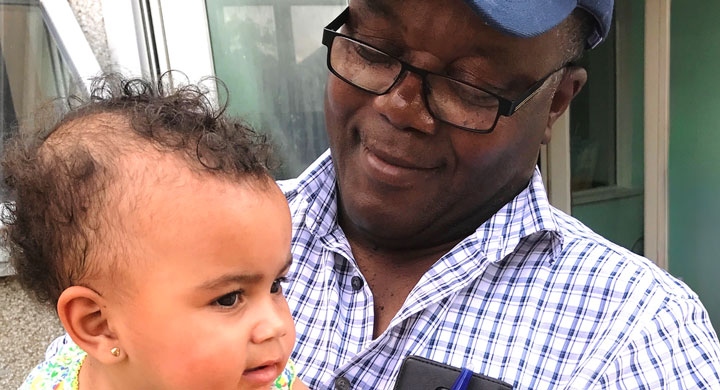
Mr Robert Barnor, 68, was admitted to St Helier Hospital Intensive Care Unit on 7 April 2025 after being found collapsed at home following a stroke. His neurological condition improved and he was successfully weaned off life support ventilator in July 2025.
Mr Barnor suffers from diabetes and depends on dialysis being provided twice a week for survival.
However, the doctors told the family that because of severe brain damage suffered by Mr Barnor, it was in his best interests to die, and threatened to take the family to court unless they agreed to a withdrawal of treatment. An intensive care consultant allegedly told the family: “I regret keeping him alive at the start.”
However, since July 2025, the Hospital resisted the family’s requests to provide medical records and brain scans to substantiate that view, or to obtain an independent opinion from a neurologist.
The Hospital also refused the family’s requests to discharge Mr Barnor home, to transfer him to a care home, a neuro-rehabilitation centre, or to move him from the Intensive Care Unit to a specialist renal ward.
The family and the Hospital agreed to engage a professional mediator to resolve their dispute, and were in the process of agreeing a suitable date in February. In a dramatic volte-face, last Friday 6 February the family were urgently summoned to a meeting with two intensive care consultants and a kidney consultant who announced they had taken a “clinical decision” to terminate Mr Barnor’s dialysis and allow him to die in the next few days, without either reaching an agreement with the family or making an application to court.
In an earlier case, An NHS Trust v Y [2019] A.C. 978, the Supreme Court gave guidance to doctors that it was permissible to stop treatment if the family agreed, but
“If a dispute has arisen and cannot be resolved, it must inevitably be put before the Court.”
However, in a formal letter from its solicitors this Wednesday 11 February, Epsom and St Helier University Hospitals NHS Trust confirmed its “clinical decision” to stop providing dialysis after that date, in the expectation that Mr Barnor will die within several days.
Supported by the Christian Legal Centre, the family has instructed lawyers to take the unusual step of making their own urgent application for the High Court to determine whether it is in Mr Barnor’s best interests to receive life-sustaining treatment. Such applications are usually made by NHS Trusts against the families.
The family’s legal team will argue that the distinction between a ‘clinical decision’ and a decision to withdraw life-sustaining treatment is artificial and legally meaningless. A decision to end a patient’s life may only be lawful if it is either agreed with the family or approved by the court.
The Trust belatedly disclosed thousands of pages of medical records, which include a second opinion from an eminent expert in prolonged disorders of consciousness, Professor Lynne Turner-Stokes. In a letter which appears to be intended as confidential and not to be shared with the family, Professor Turner-Stokes advised the Trust to present its decision as “clinical” and not to use the words “best interests” to avoid the decision being scrutinised by the courts. Professor Turner-Stokes also advised the Trust to ensure that decisions to withhold treatment are recorded in advance as made by a “multidisciplinary team” (MDT) “so that no single individual finds themselves responsible for a decision under circumstances where they feel threatened – because, in that case, the default will be to give treatment that is clinically inappropriate rather than open themselves to the risk of challenge or prosecution. If the MD team decision has been clearly made and documented, it is then the responsibility of the Trust rather than any individual.”
Family: “We are being forced into a corner”
Lesley Townsend, Mr Barnor’s daughter, said:
“My father’s life hangs in the balance, and yet the Trust has chosen to keep us in the dark and push ahead with a plan that they know is unlawful. We have been patiently trying to engage in good faith and listen to the doctors’ views with an open mind. From the outset, whenever we tried to discuss the situation with doctors to understand my father’s best interests, we were met with a culture of ‘no’ . One day we were told we were following a legal process to resolve any disagreements; the next day it was swept aside with a high-handed declaration that the Trust has decided to condemn my father to death and we are not allowed to have any say about this. As a family facing a tragic situation, we also had a face a sustained campaign of strong-arming from the Trust bureaucracy. No family should ever have to go through this. We are simply asking the Trust to follow the law.”
“I have had to take on this immense responsibility as family spokesperson to shield my other parent who has gone through their own diagnosis of cancer twice over and now has been diagnosed with stress induced liver disease as recently as January 2026 when she became extremely unwell due to the stress the doctors in St Helier hospital have put us through.”
Andrea Williams, Chief Executive of the Christian Legal Centre, said:
“When there is a dispute about a patient’s best interests, the law requires an application to the Court of Protection. Clinicians do not have the power to end a patient’s life by withdrawing treatment simply because they prefer their own view over the family’s.
“Judicial oversight of such life-and-death decisions is one remaining legal safeguard – weak and inadequate as it currently is – for the principle of sanctity of life and to protect the rights of families against irreversible decisions driven by the culture of “right to die”.
“We are ready to stand with the family in their time of need.”