Parkrun is strictly billed as non-competitive, so why does it matter that the results of biological women aren’t interfered with by transgender, biological males? Paul Huxley explains why creation reality matters
Woman means woman. This has been evident to most of us since we noticed a difference between mummy and daddy but became clearer in UK law after the Supreme Court’s decision just over a year ago.
Since then, the clarification has been working its way through institutions, with court cases like the Darlington Nurses confirming that many organisations across the country have unlawful changing rooms policies.
And that’s also true of sporting organisations – even international ones.
World Athletics, under the leadership of its president Lord Coe, introduced testing last September for “the protection and the promotion of the integrity of women’s sport”.
Sadly, not everyone has introduced these sorts of rules. That’s why the Women’s Sports Union (led by Baroness Davies MBE and Tracy Edwards MBE) and ADF International warned ten sporting bodies to “comply with the law and protect women’s sport, or face legal action.”
These sporting organisations even included bodies overseeing football, baseball, softball and rounders – sports where it is not just the competition that is at risk but where there could be safety concerns due to mismatched body types.
In all these cases, it’s obvious that women’s competitions should be strictly for women.
The surprise inclusion of Parkrun
But for many people, it was the inclusion of Parkrun in the list of organisations that surprised people.
Parkrun, you see, is billed as strictly non-competitive.
The Parkrun app tells me that I am at the 98th percentile for completed parkruns and the 89th percentile for volunteer credits. I have heard (and even given) many briefings where everyone is told “Parkrun is a run, not a race”. With the Parkwalk initiative it’s even becoming less of a run.
That is the consistent message from Parkrun HQ. It’s available to everyone, for free, forever and puts effort into breaking down barriers that stop people wanting to come.
It’s very different from sporting bodies that oversee explicitly competitive play from grassroots up to the professional level. It’s also non-contact and doesn’t provide changing facilities and toilets.
That’s why it felt off to some people that Parkrun would be ‘targeted’ in this way. No one’s supposed to care about who placed where and what the course records are.
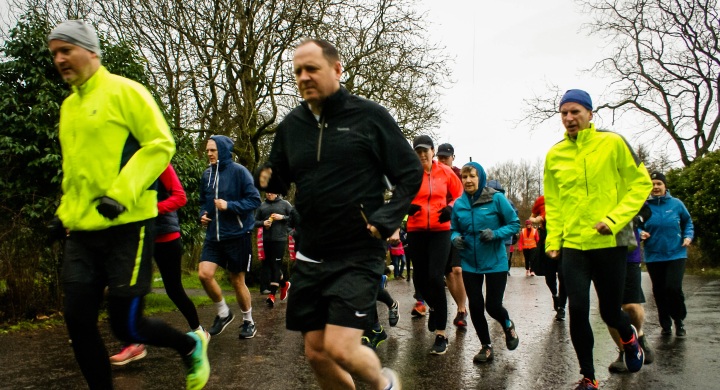
The open secret – nearly everyone does care
That’s the official line. But the open secret is that just about everyone really does care about the results.
Sure, getting your elbows out and taking out another runner is certainly frowned upon. Nevertheless, caring about your placing and not just your time is common.
Some faster people than me chase first place finishes and course records. Nearly all of us are spurred on to finish that little bit faster if we hear the footsteps of some far-too-energetic 7-year-old closing in on us in the last 100 metres.
And that applies to the age and sex groups too. When the results are processed each Saturday, each runner is sent an email saying something like:
“You were the 85th male and came 9th in your age category VM40-44”
As a man, that result means very little to me. I don’t mind that, on that occasion, 17 women were faster than me. But I know that the equivalent statistics for women are very meaningful. It is very motivating for some to try to be the first female finisher or the first in their age group.
Chasing these kinds of statistics (and perhaps course records) drives people to exercise more during the week and to be careful about what they eat. In a society that faces health challenges related to poor diet and inactivity, we could do with all the motivation we can get.
Women’s records held by men
The statistics matter.
But a few years ago, people (and newspapers) started noticing that several of the course records for women belonged to men with trans identities. Following several of these stories in 2024, Parkrun abruptly removed these statistics from display on its website.
It claimed that this was nothing to do with the transgender issue. It said that course records could be off-putting to newcomers. But approximately no one believed them and the Bring Back The Stats campaign began. The 5k app and websites like Parkrace found ways to reintroduce these statistics until recently Parkrun took over the 5k app, tentatively re-embracing statistics.
So the issue of course and category records has become more relevant again, just at the point where Parkrun HQ was warned about its legality.
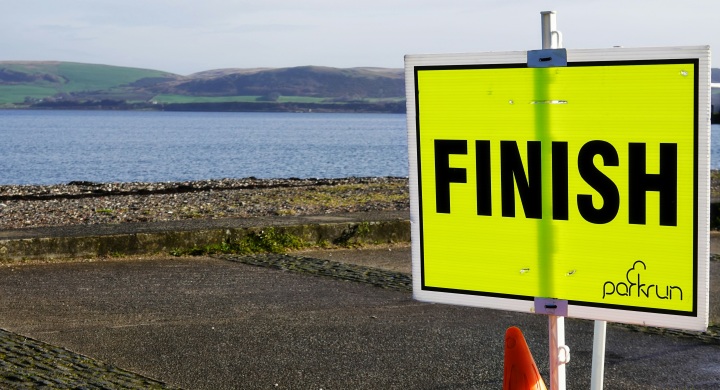
It doesn’t require heavy-handed policing
When I heard about the letters, I was concerned that we would see all the records removed from sight again. That we’d stop being told about our age category results.
I truly hope the leadership doesn’t make that mistake.
It should simply commit to the truth.
Its current policy is that trans-identifying participants may define themselves however they like, no questions asked. All it really needs to do is change that policy to ask runners and walkers what they actually are.
This is a direct parallel to the issue of trans-identifying men using women’s toilets and changing areas. The expectation should be clear – it’s not OK. There are rarely going to be guards or staff members on doors, directly enforcing the rule. When a man intentionally crosses those boundaries, women are able to be more on their guard – this is the sort of man who doesn’t think rules apply. It gives recourse to the women, whose space it really is, to challenge misbehaviour.
Likewise, there are many light touch ways to enforce such a rule at Parkrun. No one is calling for compulsory sex tests to be considered a female – just for the results to be as truthful as possible.
The course I run is 4.5 laps of our local park. It would be pretty easy for someone to take particular shortcuts or to run only 3.5 laps and claim first place or a course record. Brazen cheating like this amongst the fastest runners would likely be caught by the volunteers and those results removed. The same could easily be done for obvious men identifying as women.
What should Parkrun do?
I can think of several diplomatic ways that this issue could be addressed with a lighter touch, remaining inclusive of all participants.
One option would be for Parkrun to offer a U (Unknown) category where anyone, trans-identifying or not, could choose not to have their sex listed publicly. Trans-identifying people could be asked (or compelled) to have this option chosen. They could even still receive their personalised results according to their chosen identity without affecting the public results. No one needs to be ‘outed’ – this kind of compromise ought to attract minimal controversy.
Another would be to add TM and TF categories. These would clearly be new age groups that indicate what people identify as and don’t purport to be actual male/female records. It would keep the F categories free for women. It would also mean that women who are on artificial testosterone (i.e. ‘trans men’), which likely boosts performance, would not generally be in the F category.
But the gold standard would simply be to expect people to tell the truth. We wouldn’t let elite male athletes like Josh Kerr identify as 11-year-olds to ‘win’ junior Parkrun so why would we let men identify as women?
Then, if anyone breaks the new policy, their results are publicly changed to ‘Unknown’, like those who forget their barcodes. Nothing would stop them participating, Parkrun could even continue to email them their personal results – it simply wouldn’t show publicly.
Created reality matters
Why would a Christian like me spend time writing about all this?
I really appreciate Parkrun and particularly its openness to all kinds of people participating. It’s a public good, enabling fitness, wellbeing and strengthening communities. I don’t want anyone to be unwelcome.
But false identities are ultimately lies. They lead us away from the truth about ourselves and about each other. It is not loving to claim you are something that you are not, nor is it loving to say it about someone else.
False identities lead us away from each other – away from how God made us and away from the parents who named us and families that brought us up.
In the era of peak trans, we were told that trans women simply were women. This was unpalatable to many but lots of us were still willing to go along with trans identities as long as we understood them to be little white lies.
But our public lives, even in Parkrun, should be based on truth.
That simple commitment, applied across all that we do and say, would transform society in good and beautiful ways.