Communications assistant Holly Baines looks at more encouraging signs of growth and the changing challenges it brings to the Church
Over the last few years, our nation has seen a shift in the trend of persistent secularism.
Figures suggest that Gen Z is reconsidering spirituality and increasingly embracing Christianity – or at least ‘cultural Christianity’.
Now it transpires that Bible sales in the UK reached a new record in 2025, with a 134% increase since 2019.
Is this shift really indicative of a greater sea-change across our culture? An increase in Bible sales, while good news, is only one data point and means little when taken in isolation.
But it’s not the only data point suggesting a seismic shift in our country’s fundamental beliefs.
In August last year, YouGov polling revealed that 37% of 18 to 24-year-old Brits believe in a ‘God/gods’, compared to a mere 16% in 2021.
Last year the ‘Quiet Revival’ report sent shockwaves through Christian and secular circles alike by claiming Gen Z was leading the return to church, as evidenced by a major increase in young people claiming they were attending church.
And only last month, research showed 45% of Brits planned on attending church over Christmas.
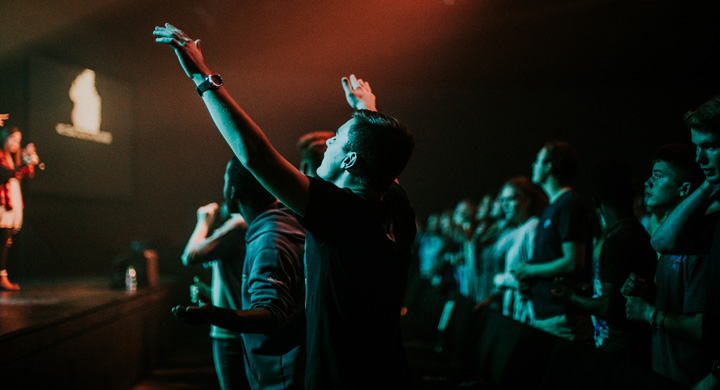
Are the stats really showing the whole picture?
However, some have criticised these statistics, especially the ‘Quiet Revival’ report, saying some of these major revival figures are not being reflected in genuine church attendance.
For instance, are 21% of young British men really attending church at least monthly?
And if so, where are they? Churches across the nation would be overrun with young men if this accurately recorded their behaviour.
It is fair to question the accuracy of the figure, but such a profound change in self-reporting does not appear out of thin air. We are in the middle of a culture shift.
Brits are being drawn to Christianity, whether from an interest in some ‘spiritual’ meaning, a desire for community, a recognition of the value of our Christian heritage, or, what we pray is the primary reason: a genuine faith in Christ.
Suddenly, people are interested in being a Christian or being associated with Christianity.
The rise of Cultural Christianity in a postmodern world
This change seems to have been spearheaded by many high-profile thinkers and campaigners who have either embraced the benefits of a Christian society or become born-again Christians themselves.
From renowned historian and writer Tom Holland to influential psychologist Jordan Peterson, feminist intellectual icon Louise Perry to world-class podcaster Joe Rogan, the shift towards embracing Christianity – or at least Christian morality – is undeniable.
And as seen in Tommy Robinson’s desire to “put Christ back in Christmas”, in former Muslim Ayaan Hirsi Ali’s public conversion to Christianity, and in Wikipedia co-founder Larry Sanger’s conversion, this change is reaching into some of the most unexpected and diverse hearts and minds.
Not all of these figures explicitly claim to be Christian but there is a marked shift in people’s willingness to be linked with Christianity. It is becoming seen as something to embrace rather than to be ashamed by.
Have we ever seen this kind of seismic shift before?
Since reliable polling and surveys on public belief in God/gods fully materialised in the 1980s, there has been a clear and consistent downward trend in belief in God – a progression that almost certainly started decades prior.
If real, the reversal of this decline – spearheaded by an eclectic mix of Gen Z, intellectuals and ‘everyday’ people – is unlike anything most of us have experienced before. This positive change in the direction of travel hasn’t been experienced in living memory.
What a remarkable and unexpected opportunity that is before us! Now is a crucial time to fuel this change, to disciple the Christ-interested into Christ-followers.
At Christian Concern, we have fought for Christian morality and Christian foundations while the going was tough. There is a long way to go, but if the tide has turned, we will be in unchartered territory.
Christianity must prompt change – not just cultural appreciation
One challenge will be a cultural Christianity that wants the fruit without the root; that spreads a Christian veneer over its unbelieving core.
But increasingly we’ll face influencers and politicians who court the Christian crowd.
Humans love to jump on a bandwagon, especially when it comes at little cost to themselves and is accompanied by widespread virtue-signalling or public appreciation.
If culture begins to embrace the benefits of Christianity – but rejects real transformation by Christ – we must be incredibly cautions of embracing a ‘Christian’ identity that exists in opposition to Christ’s teachings.
A tragic but pertinent example of this is Lily Phillips, a pornographer known for taking part in the most extreme and depraved acts. She recently publicly shared her ‘rebaptism’ and renewed ‘Christian’ identity. But she has shown no signs of repentance, continuing to promote her participation in orgies and declaring her support for ‘gay marriage’ and abortions.
1 Corinthians 5 and 6 makes clear that those engaged in sexual immorality will not inherit the kingdom of God, and that Christians are not to associate with those who live publicly and unrepentantly in such sins, and yet call themselves Christians.
Lily is the result of a culture that has said life is meaningless, that sex is a commodity and that sexual experimentation is freedom. She may now also be the result of a changing society that sees ‘Christianity’ as desirable, that believes a relationship with God can be had on our own terms, and that desires the fruits and freedoms of Christianity without the root of Christ and repentance.
This is not to pick on Lily in particular. I hope and pray that she genuinely repents and turns to Christ. It simply is not loving to play along with a ‘conversion’ that is accompanied with no fruits of repentance and a blatant continued pursuit and celebration of sin.
A ‘Christianity’ that doesn’t call people to change is no true Christianity at all.
Her example is extreme, but many others may begin to claim Christ while remaining disobedient in important ways. How will we respond to more subtle examples of this? What if they are campaigning effectively on something we agree with while pursuing sin in other ways?
We must be willing to love such people by upholding the good while challenging or correcting residual wickedness, even if it is politically inconvenient.
This is a remarkable opportunity unlike any we have seen before: we cannot afford to let the moment slip by and welcome in a morality that is culture-shifting but not soul-redeeming.

A crucial time to stand firm and hold the line
Our nation’s tune is changing. For the first time in many of our lives, there is a statistically meaningful turn towards faith and God.
And the implications for politics and the future of the UK are seismic.
For decades past, the inevitable march of ‘progress’ has swept through the UK, pushing us towards abortion on-demand, the breakdown of marriage, the destruction of the family, euthanasia and assisted suicide, and the genderless degraded bodies that is the product of radical sexual ideologies.
But this atheistic ‘utopia’ – or dystopia – is crumbling.
Each of these ideological campaigns have attacked aspects of our Christian beliefs and eroded God’s good and beautiful design for humanity.
We have seen the decriminalisation of abortion, the widespread acceptance of LGBT indoctrination, and now the frontlines are in the battle against assisted suicide.
If this culture shift continues and results in a proper moral reformation, now is the last chance saloon for those who hate life, family, freedom and, ultimately, Jesus Christ
‘Progress’ campaigners will be desperate to push assisted suicide through this year and claim that the debate is over, and that assisted suicide is here for good.
Now is our chance to hold the line, to show our nation the beauty of living God’s way, and to stop the onslaught against the value of life.
With the current changes in our culture, this is a crucial time to not give any headway.
This is our battle in the fight for life, and it’s our chance to stop any stronghold that sets itself up against God and to teach the next generation the beauty of God’s creation and his plan for us.