The collapse of the two-party system signals a deep desire for change among the British people. But can politics bring about the change this nation seeks? Christian Concern CEO Andrea Williams comments on the recent council elections.
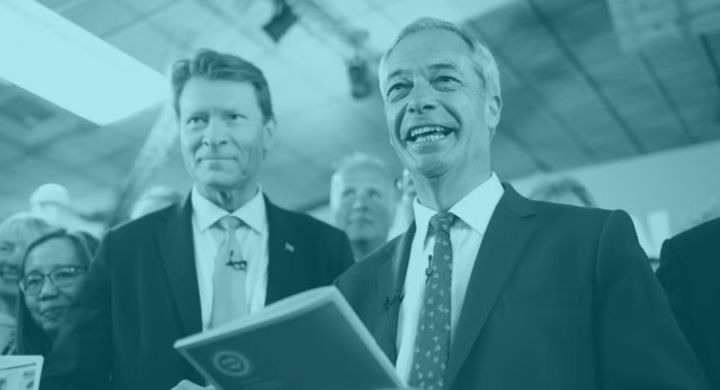
Reform UK’s success in the local elections is being described as a political earthquake. In many parts of the country, voters who had loyally backed Labour or the Conservatives for decades abandoned the established parties in frustration and anger. Across England, Reform made sweeping gains, while both Labour and the Conservatives suffered heavy losses.
The political establishment is working through the momentous shift and seeking to explain it. But ordinary people already know why.
Britain is crying out for change.
For years, millions of people have felt ignored by Westminster. They have watched living standards decline, communities fragment, public services deteriorate, and freedom of speech come under increasing pressure. They have been told to accept open-ended social experimentation while their concerns about radical and dangerous ideologies, family breakdown, crime, censorship and national identity are dismissed as backward or extreme.
The local election results show that this frustration has reached boiling point.
Trust not in princes
Of course, Christians should resist the temptation to place messianic hopes in any political party. Reform UK is not the kingdom of God, and Nigel Farage is not the nation’s saviour. Political movements rise and fall. Parties make promises they cannot keep. Human beings are flawed. Scripture warns us clearly against putting our ultimate trust in princes, though it is true that political parties and public figures can work towards the goodness of God or against it.
Christians should still pay attention to what these results reveal about the moral and spiritual condition of the nation.
This was not simply a protest vote against Labour or the Conservatives over their current leadership. It was the outworking of decades of politics that has abandoned God, his morality and his laws.
People are tired of being patronised. They are tired of being told that obvious truths are hateful. They are tired of watching politicians obsess over ideological causes while families struggle to pay bills, communities feel unsafe, and children grow up confused and anxious.
Many voters feel that Britain has lost confidence in itself.
They look at a country uncertain about what a woman is, embarrassed by its Christian heritage, reluctant to defend free speech, and unable to control its borders, and they conclude that the people in charge no longer believe in the nation they govern.
That vacuum creates opportunity for insurgent movements.
Reform’s rise is not merely a temporary protest. When large numbers of people feel politically homeless, they will eventually rally behind someone willing to articulate their concerns with clarity and confidence.
Acceptable political opinions narrowed
One of the defining features of modern British politics has been the narrowing of acceptable opinion. On issue after issue, from immigration to gender ideology to freedom of expression, many politicians have appeared more frightened of media outrage or activist pressure than concerned about representing ordinary citizens.
But reality has a way of reasserting itself.
The public can see that children are being exposed to harmful and confusing ideas about sex and identity. They can see that freedom of conscience is under threat. They can see Christians losing jobs for expressing biblical beliefs. They can see police resources being used to monitor tweets while serious crime goes unsolved. They can see the growing instability that follows when a nation abandons its moral foundations.
And increasingly, they are refusing to remain silent about it.
National repentance and determination
For Christians, however, there is an important warning here too.
A nation’s problems cannot ultimately be solved through populism, nationalism or political anger alone. Britain’s crisis is deeper than economics or party politics. It is spiritual. We are living with the consequences of decades of moral rebellion against God. We have rejected the Christian framework that once shaped our laws, institutions and public life, while assuming we could somehow keep the benefits of Christian civilisation without Christianity itself.
We cannot.
When a society abandons biblical truth, confusion inevitably follows. Marriage weakens. Family life fractures. Loneliness grows. Trust declines. Public discourse becomes more hostile and tribal. Politics becomes increasingly unstable because there is no longer any shared moral foundation holding the nation together.
That is where Britain now finds itself.
The answer is not merely a new political party. It is national repentance.
An opportunity for the Church
Christians should therefore see these election results neither with despair nor triumphalism, but with sober realism and renewed determination. There is clearly an openness in the country to conversations that would have been impossible just a few years ago. Increasing numbers of people recognise that the cultural revolution they were promised has not delivered freedom, happiness or social harmony.
That creates an opportunity for the Church.
This is the moment for Christians to speak courageously, compassionately and truthfully into public life. Not with bitterness or fear, but with confidence in the goodness of God’s design for humanity. Britain does not need more ideological confusion. It needs Jesus and His Truth. It needs strong families. It needs freedom of speech. It needs moral clarity. Above all, it needs the gospel of Jesus Christ.
Political shocks like these local elections are reminders that public opinion can change rapidly. The old political certainties are collapsing. Voters are searching for something different because they instinctively know that the current direction of travel is unsustainable.
It is time again for the Church to arise and point the nation to the Hope of Jesus Christ.