While the Westminster Parliament debate on assisted suicide is on hold, the Scottish Parliament will be holding its final, Stage 3 vote on its Assisted Suicide bill on Tuesday 17 March.
Having been proposed by Liam McArthur MSP, this bill has had over 400 amendments submitted. There isn’t a second chamber to seek approval, so this vote is binding and once it’s passed, it’s passed.
Nearly 200 medical professionals have already written to MSPs warning that in their “professional judgement, the Bill as it stands does not contain sufficiently robust safeguards to protect patients from coercion, untreated mental illness, or unmet social and palliative care needs.”
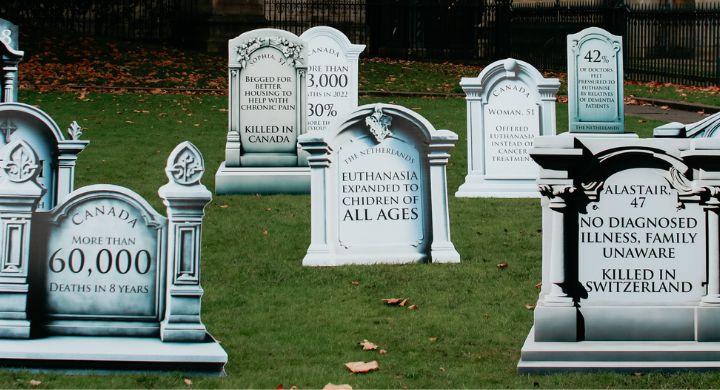
This bill is just as flawed as the one we have seen in Westminster. The British Society on Geriatrics says it is “unsafe for the people of Scotland”, adding “the bill does not contain adequate safeguards to protect older people, the biggest group to be impacted, nor does it protect healthcare professionals who do not wish to participate in the assisted dying process.”
That’s why we need to do all we can to make sure MSPs vote against this bill, which fails both patients and healthcare workers.
One MSP who has already withdrawn their support, having initially voted for the bill, stating, “I am not convinced that coercion – especially subtle or internal pressure – can be realistically identified or prevented in vulnerable individuals.”
So, it’s clear, there is a big chance this bill can be defeated.
If you are in Scotland, you can find out how you can write to your MSP, urging them to speak and vote against this flawed piece of legislation that will have serious consequences for tens of thousands of lives.
But this matters to all of us – a vote for assisted suicide in Scotland would bolster calls for UK-wide legislation. If you are not in Scotland, please could you urge any friends and family there to take action?
How to write:
- Find your MSP – use this page if you don’t know who that is.
- You will have one local MSP, who represents your constituency and a few regional MSPs, who represent your region – (we encourage you to write to as many as you can)
- Given the short timeframe that we have, it would be best to email your MSP.
Points to make:
Assisted suicide will put a burden on the most vulnerable in our society
- The evidence shows, vulnerable individuals may feel pressured to opt for assisted suicide – a “right to die” can soon become a “pressure to die.”
- This has been shown overseas. For example, in Canada, a armed forces veteran, Christine Gauthier, who requested a new wheelchair ramp, was asked instead, if she had ever considered Medical Assistance in Dying (MAiD)
Legalising assisted suicide implies that some people are ‘better off dead’
- Liz Carr produced a superb BBC documentary, Better Off Dead?, where Carr interviewed multiple disabled people to obtain their views – testimony of disabled people is that, sadly, people in our society already frequently speak to disabled people in ways that imply they would be ‘better off dead’.
- Should the law really be changed to lend legal legitimacy to the idea that suicide is the right option for some people?
- The law would therefore imply that some lives are not worth living. The only way to avoid this is to keep the law as it is and not legalise assisted suicide.
The relationships between patients and medics are compromised
- If assisted suicide is legalised, then carers or medics could suggest assisted suicide to patients. This turns carers or medics into agents of death rather than trusted providers of care and medicine.
Legalising assisted suicide will increase the already extreme pressure placed on the NHS
- Adding assisted suicide as an acceptable solution to suffering will prove disastrous in an underfunded, understaffed, and overcrowded healthcare system.
Legalising assisted suicide devalues human life
- The law, of course, distinguishes killing animals from killing humans. Killing a human is a serious crime. Killing an animal is not. This is for good reason. Humans are not mere animals. Human life is widely regarded as sacred.
The examples of other countries prove safeguards are challenged and weakened
- In Oregon, 43.3% of individuals citied “being a burden” as being the reason for seeking assisted suicide.
- Again, in Canada, Kathrin Mentler, a 37-year-old Canadian from Vancouver, visited a hospital seeking help for her suicidal thoughts. Instead of support, she was asked “have you considered MAiD?”.
- How will this bill really protect against coercion of the most vulnerable in our society?
- Safeguards are not set in stone, the evidence is clear, nearly everywhere Assisted suicide is legalised, the safeguards get extended – so can we really be sure this will not happen in Scotland?
Personal testimonies
- Personal stories can have a powerful impact when speaking about End-of-Life issues – if you have a personal experience/story that you feel comfortable to include, why not share with MSP. Let’s make sure MSPs realise this will have a real-world effect on real people.
Finally, please do share – lets mobilise the Church. Pass this onto your church leaders and networks – we only have just under a fortnight to reach MSPs to get them to reject this bill.
And if we can win this vote in Scotland, it will be a huge boost of momentum to stopping the flawed bill in Westminster.
Only 7 MSPs need to change their mind – we are not giving up yet!