From troubled dreams to Parliament Square, Paul Huxley explores how prayer and practical action helped resist assisted suicide in Britain.
Seated around the Christian Concern boardroom on a Friday lunchtime in January 2025 was a group of staff members I had persuaded to take part in a game.
Not a normal game though. I had put together a type of ‘wargame’ to model what might happen in the coming months as assisted suicide progressed through Parliament. One team would ‘play’ as the pro-death lobby, one as the opposition. Each would try to take actions to sway MPs to their side and a roll of a die would determine how successful their attempts were.
We didn’t get all that far in that one lunchtime, but one striking thing happened. The team opposing assisted suicide couldn’t stop rolling sixes. Just about everything they tried was successful, while the pro-dying team faltered.
The lot is cast into the lap, but its every decision is from the Lord (Proverbs 16:33 ESV).
Surprising and wonderful
There will be a lot of reflection and analysis over what has happened with MPs voting to stop Lauren Edwards’ attempt to revive the assisted suicide bill.
I want to focus on the spiritual battle.
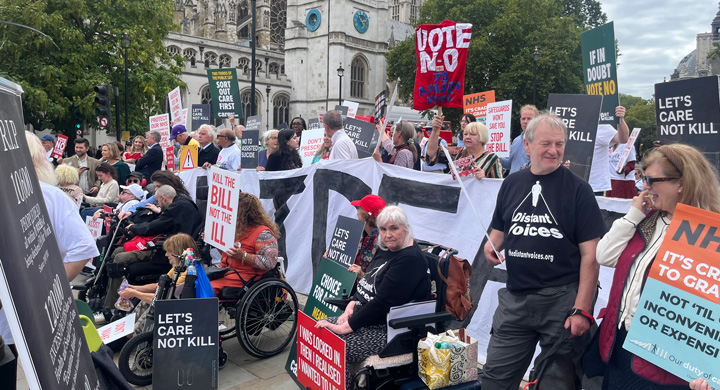
Although the Christian Concern team took lots of practical actions over the two years of Leadbeater’s and Edwards’ bills – displays outside Parliament, guides, MP tools, a creative film and more – as things progressed, we focused increasingly on prayer – most recently through our ‘six weeks to save lives’ prayer livestreams.
I am convinced that these prayer efforts (which went well beyond Christian Concern itself) played a vital part in the resistance to assisted suicide. Yes, as a Christian, I am theologically compelled to say that prayer matters. But I also saw surprising answers to prayer over the course of the campaign that were surprising and wonderful.
We prayed for God’s blessing on Esther Rantzen, despite her cheerleading for the bill. She later shared how she’d found life surprisingly positive and worth living after continuing treatment, well beyond the time she had expected to live and undermining her position.
We prayed that the pro-death lobby would make foolish mistakes. They put out crass adverts on the tube. They made bigoted comments about people with religious beliefs. They stubbornly refused to take safeguarding concerns seriously, leading to wide criticism from expert organisations.
Sir Keir Starmer, who was strongly supportive of the bill, went from his landslide general election victory in 2024 to resigning as an MP shortly before last week’s vote – replaced as Prime Minister by Andy Burnham who was far less supportive.
It was like our side kept rolling sixes and Dignity in Dying kept rolling ones.
Dreams and nightmares
One story from the House of Commons chamber on Friday stood out.
Janet Daby MP for Lewisham East shared about her previous support for the bill, balancing it with other concerns she had about vulnerable people, inequalities and the possibility of coercion.
Remarkably, she said:
“Following my vote in favour of assisted dying, I had nightmares about dying and death for two nights. I had to wrestle with the knowledge that I was not entirely comfortable with the decision I had made. My conscience was not at peace, and I cannot again in good conscience vote for the Bill.”
This seems to me an obvious answer to our prayers. The Bible very often shows God working in the affairs of mankind by giving dreams and nightmares to its leaders. Abimelech (Gen 20), Pharaoh (Gen 41), Nebuchadnezzar (Daniel 2) and Pontius Pilate, via his wife (Matthew 27), are some of the more prominent examples.
Did other MPs experience the same? Did God trouble the dreams of some of the MPs who stayed away? Did he give extra strength and courage to those who stood against the bill?
We won’t know all the answers this side of eternity, but Christians shouldn’t be surprised if their prayers made a deeper impact on this bill than they could imagine.
Activism and piety
I am not a fan of the kind of pietism that says that all we should ever do on issues like this is pray. We are called to do good to others, not merely pray for them, which is as applicable to saving lives as it is to feeding the hungry and clothing the poor.
But as an ‘activist’, I would be a far greater fool to neglect the importance of prayer in the battles we face. God delights to answer the prayers of his people, using the foolish things of the world to shame the wise.
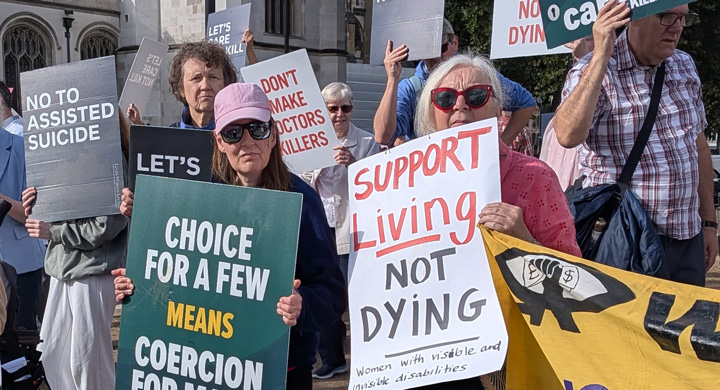
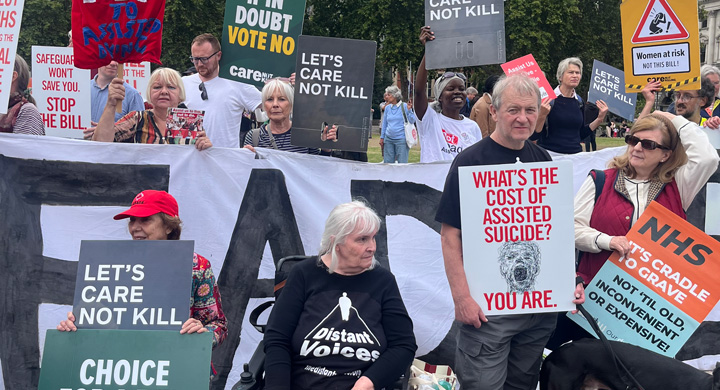
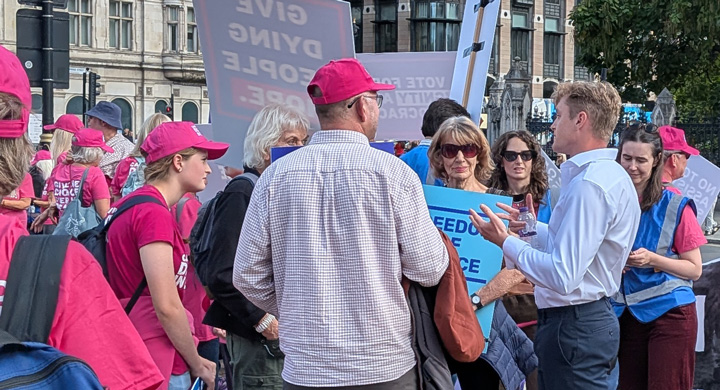
As MPs debated in the chamber and eventually voted, I was in Parliament Square, helping with the demonstration. To the north of the square stood Dignity in Dying supporters with their boxes full of colour-co-ordinated T-shirts and signs. On the south was the resistance, holding all sorts of signs and banners from disability groups, medical groups, palliative care experts and – importantly – Christians.
A small group sang worship songs like Amazing Grace, Way Maker and Shine, Jesus, Shine. A woman was over the road, loudly preaching and praying. Some Christians were engaging with the pink T-shirts, seeking to persuade and evangelise.
And down the road at Old Palace Yard, another group featuring many who are friends of our ministry met to ‘Blow the Trumpet in Zion’. Their gathering that wasn’t primarily to do with assisted suicide, but that certainly was calling the nation back to Jesus Christ.
Did the Lord hear their prayers in that moment?
I wouldn’t bet against it.
Our nation faces many more battles. Assisted suicide may be on hold for now, but there is so much work to do elsewhere. ‘Conversion practices’, abortion, sexuality, gender, Islam, freedoms…
So much work, in fact, that we need to get straight down to business.
That is: the business of prayer.