24 August is William Wilberforce’s birthday. Darius Sandhu explains how William Wilberforce’s long campaign shows that conviction, cooperation and perseverance can challenge an entrenched injustice
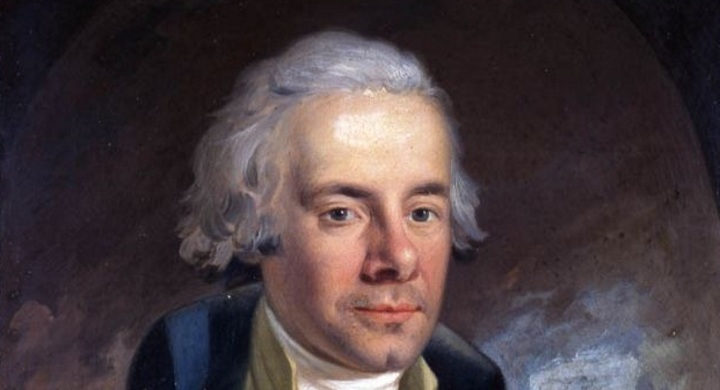
On this day in 1759, in Kingston-Upon-Hull, someone was born into a merchant family who would go on to change and influence the world.
Throughout the many biographies written about his life, you will see him as someone constantly described as small and sickly, but yet, it was he who would take on the might of the British Empire, and in the end prove victorious.
William Wilberforce changed the world. That is a phrase that may be often attributed to many who have occupied seats of power but rarely accurately ascribed. Entering Parliament at just 21 years old, being close friends with William Pitt the younger, himself Prime Minister at just 24 years old, Wilberforce, driven by his faith, led the fight for the abolition of the slave trade, and ultimately the abolition of slavery throughout the British Empire.
But it all started with a little faith.
Wilberforce himself would be the first to describe himself as someone who had no Christian faith at all. But that all changed when, while on a holiday tour of the continent, he came to truly know Jesus Christ. From there, a story that would change the lives of tens of millions of people started.
He initially thought that becoming a Christian would mean he would need to give up public life altogether, but through the counsel of a former slave trader, John Newton, as well as encouragement from John Wesley, he was encouraged to stay. Newton himself met the Lord Jesus at the helm of ship in the middle of a literal storm, transforming his life, eventually giving up that dark trade, settling in London and speaking against the trade for the rest of his life. Of course, it was Newton that penned the hymn Amazing Grace, which has travelled around the world impacting quite likely billions of people. Faith certainly changes things.
Wilberforce therefore remained a member of Parliament, and soon after in his diary defined his two great objects:
“… the suppression of the slave trade and the reformation of manners.”
Two objectives he would give the rest of his life to fulfilling.
His battles
The first abolition motion came to the House of Commons in 1789. It would be brought back a further eight times until 1807, when the motion finally passed. He was mocked in papers, vilified and targeted, but victory was finally his.
It is also very important to note this work was not done alone. The celebrated Clapham Sect worked to transform Britain.
They built a machine that wrote pamphlets, travelled miles, and submitted petitions to change public opinion, and to change parliament.
He eventually resigned his seat, passing on the baton for the final leg of the battle, but he never gave up his goal of total abolition. In 1833, the message reached him that Parliament had voted to abolish slavery throughout the British Empire. Three days later, William Wilberforce passed away.
What does Wilberforce leave for us?
It is worth remembering the scale of battle that William Wilberforce was up against. The slave trade made up a large part of Britain’s economy. It had numerous backers in Parliament, many of whom that did not want this very profitable trade to come to an end. I’m told that the sum of money Britain used to abolish the trade reportedly made up to 40% of our nation’s economy, with the final payments made this century!
Wilberforce took on an entire industry that had everything going for it – the money, power and influence. And yet, it was Wilberforce in his final days that rested, knowing his work was successful. The battle may be long; some of the Clapham Sect didn’t live to see the victory. But they all played their part in securing it.
As we look out as Christians to the evils we see today, remember that what evils may seem permanent are not necessarily permanent.
Scripture tells us the faith of a mustard seed can move mountains; Wilberforce did not just believe that but acted upon it.
“and let us not be weary in well-doing, for in due season we shall reap, if we faint not.” (Galatians 6:9)