Andrea Williams comments on Labour’s draft bill to ban ‘conversion practices’. This piece was first published by Evangelicals Now
At the very heart of the Christian faith stands a simple, glorious truth: the gospel of Jesus Christ brings transformation. It is not advice, not affirmation of who we already are, but good news that we can be changed, redeemed, restored, and made new.
As Scripture declares: “Do not conform to the pattern of this world but be transformed by the renewing of your mind.” (Romans 12v2)
This is the hope the church has proclaimed for 2,000 years. It is the hope offered freely to all: whatever our past, whatever our struggles, whatever our desires, our Lord Jesus Christ calls us, saves us, and transforms us.
And it is precisely this truth that now stands under threat.
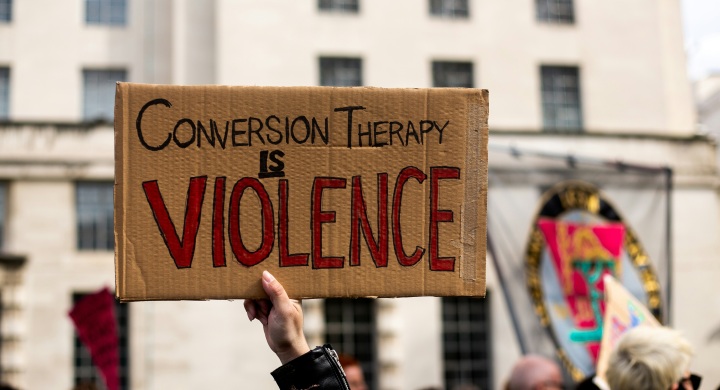
A law without evidence – and against transformation
The Government’s proposed Conversion Practices Bill is presented as a measured and necessary step to prevent harm. Yet a serious question remains unanswered: where is the evidence that new criminal laws are needed?
For years, this question has gone unanswered. Existing laws already make it abundantly clear that abuse, whether physical, coercive, or degrading, is wrong and punishable. Christians do not defend such behaviour; we reject it outright.
But this bill does not simply target abuse. It reaches further into the realm of belief, conversation, prayer, and pastoral care.
It risks redefining in law the very ministry of the church as something suspect; it risks criminalising the gospel.
When the gospel itself becomes the problem
At its core, the bill defines a “conversion practice” as conduct intended to change someone’s beliefs about their sexual orientation or gender identity.
But here lies the deeper issue: the gospel is about change. The gospel is about conversion.
The whole call of Christ is one of transformation – not condemnation, but renewal. Christians believe that God speaks into every part of our lives, reshaping our identity, our desires, and our direction. When we fall in love with Jesus we fall in love with His words and the moral code He sets for our life. His blood was shed for our sins.
Under this bill, ordinary Christian life could be recast as something dangerous.
- A pastor praying with someone seeking to live according to the gospel imperative that sexual expression is to be reserved for marriage between one man and one woman
- A parent guiding their child in line with the sex they were created in male or female
- A Christian offering encouragement toward holiness and obedience
- A church teaching the truth of God’s Word
None of this is abuse. It is discipleship. It is love expressed in truth.
Yet all of it may fall under suspicion.
The chilling effect: Silencing faith in practice
The greatest danger may not be prosecution, but hesitation.
When the law becomes broad and subjective, when concepts like “emotional pressure” are left undefined, fear quietly takes hold. Pastors may stop short of prayer.
Parents may refrain from guiding. Churches may withdraw from care. Not because they are causing harm, but because they fear being accused of it.
And in that silence, the gospel’s life-giving message is diminished.
A stark imbalance
While the bill creates wide latitude for medical intervention to affirm a person in the opposite sex, it offers no clear protection for Christian faith.
There is no meaningful safeguard for:
- prayer ministry
- pastoral support
- voluntary Christian counselling
- parental guidance shaped by faith
What is endorsed by the state is protected. What is rooted in the gospel is left exposed.
The freedom to be transformed
There are many who freely seek help from the church because they want to live in obedience to Christ. They are not coerced, they are convicted.
Do they not have the right to pursue that transformation?
True freedom includes the freedom to change. To deny that is to deny something fundamental, not only of the Christian faith, but of human dignity itself.
A call to stand firm
This bill creates a framework that places Biblical teaching, prayer, and pastoral care under suspicion. And in doing so, it edges towards something deeply concerning: a society in which the transforming power of the gospel is further pushed to the margins.
Now is the time to speak with clarity and courage. Now is the time to ask:
- Where is the evidence for such sweeping change?
- Why are existing laws insufficient?
- Why is faith-based ministry left unprotected?
Because once the chilling effect begins, the damage will not wait for a verdict. It will be felt in quiet compromises, in silenced prayers, and in ministries that no longer dare to offer the hope of true, life transforming conversion to Christ.
The unchanging truth
The gospel does not leave us as we are. It changes us: lovingly, powerfully, completely. That is its beauty. That is its promise.
And that is why it must remain free to be proclaimed.
We will not stop speaking of the power of Christ to transform lives.