Women accessing abortion not told of the risk they would remain childless

10 November 2025

New analysis by independent public health consultant Kevin Duffy has shown that many women who access abortion in their twenties will remain childless at 45 – a risk they are not told about.

It shows that in 2022, it is very likely that more than 5,000 childless women aged 29, who presented for an abortion, were not warned of the 50% chance that they would remain childless at 45.

Andrea Williams, chief executive of Christian Concern, commented:

“Despite their reputation as ‘pro-choice’, abortion providers fail to give women the full picture of what the choice to abort will mean for them in the long term.”

“How many women would make different decisions if they knew of the 50/50 chance that they would never have children?”

Lowest fertility rate on record

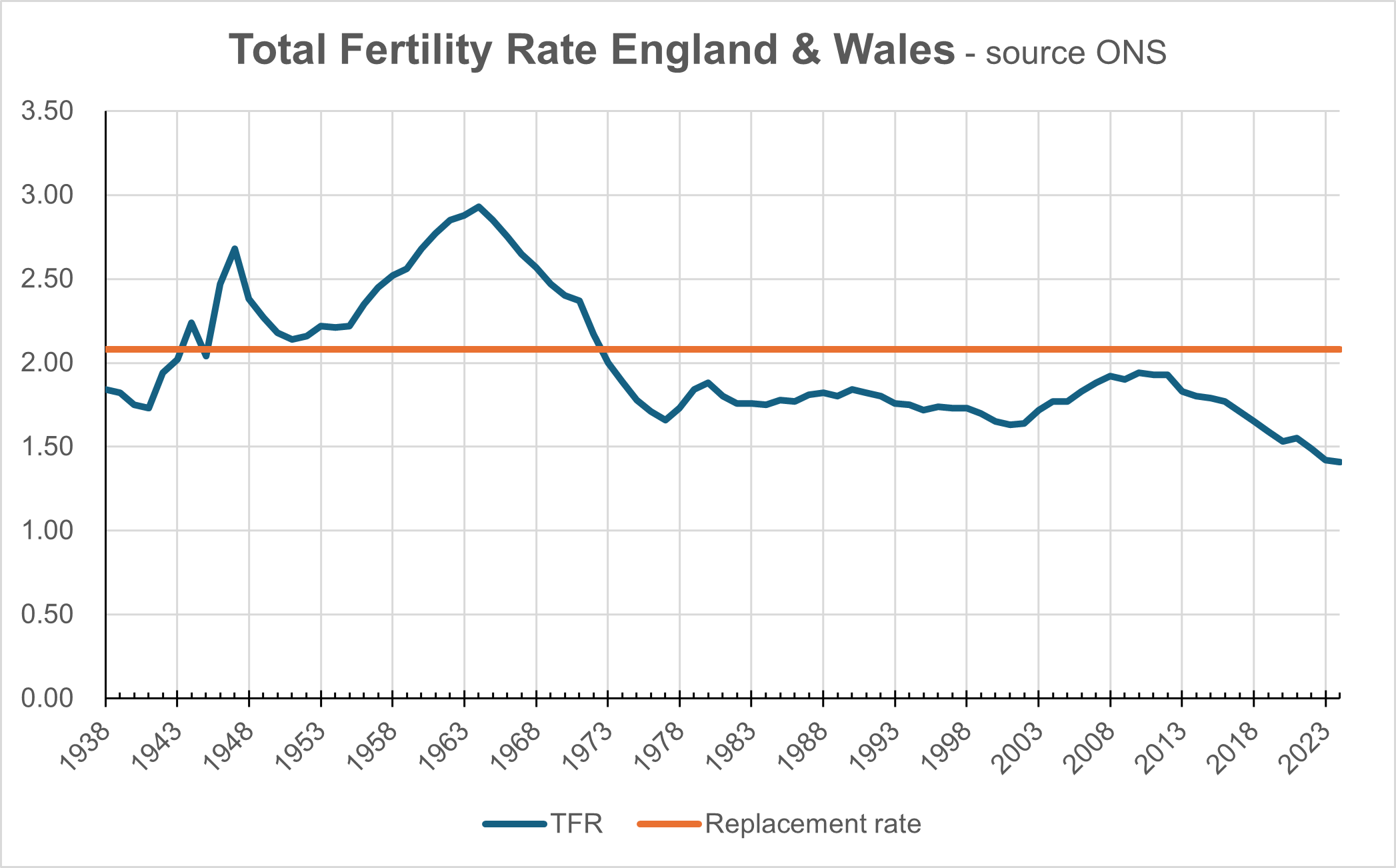
In August 2025, the Office for National Statistics (ONS) announced for England and Wales that the total fertility rate (TFR) in 2023 was 1.41, “the lowest value on record for the 3rd year in a row.”

The total fertility rate in England and Wales has remained below replacement level 2.1 since 1973 and has steeply declined since 2012. The report notes that this poses “serious challenges for our society and economy”.

Duffy writes, “If we are to address this issue responsibly, we must confront all contributing factors—including the role of abortion—with honesty and urgency.”

Although fewer women are becoming pregnant each year, there is a rising abortion rate among them.

Andrea Williams commented:

“Every unborn child deserves protection from the any-reason, any-stage abortion practices that anti-life activists in our country want.

“These practices are not just wrong, but these abortions are a major contributor to our wider problems. Hundreds of thousands of people go missing every year, meaning a smaller workforce supporting an aging population.

“Censorship zones around clinics and pills by post make it easier than ever for women to be nudged towards a choice to abort rather than presented with other options.

“At the very least, abortion providers should be required to present women with the full implications of a decision to abort, as well as opportunities for independent counselling and other forms of support.”

  • Share

Related articles

All content has been loaded.

Take action

Join our email list to receive the latest updates for prayer and action.

Find out more about the legal support we're giving Christians.

Help us put the hope of Jesus at the heart of society.

Privacy settings

Our website uses cookies, usage analysis and other technologies. We use these tools because they help us to run our website, provide you with content (including video and audio clips), understand how people use our website, make improvements to our services, and promote our work more effectively. This means that we and selected third-party services may store cookies and other similar information on your device, and may analyse how you use our website. Some of these tools are necessary for our website to function as intended but others are optional, and you can choose whether or not to allow them. You can find out more here.

Core functionality

Certain cookies and other technologies are used on our website to provide core functionality. You can read more about this here. You may be able to use your browser settings to block these tools but if you do, our website may not function as intended.

Embedded content

To enrich your experience of this website, we embed carefully selected content from other platforms. For example, we embed video clips from our YouTube channel, and audio clips from our SoundCloud channel. These third-party platforms may store and use cookies (or similar technology) on your device, and may analyse your use of this site or the embedded content. We do not directly control what technologies they use. You can find out more here. If embedded content is disabled it may affect your experience of this website.

Analytics and promotion

This website uses tools from selected third-party providers (Google and Facebook) to help us understand how people arrive at and use our website, and to measure and improve the effectiveness of some of our promotional activity. These tools may store and use cookies (and similar information) on your device, and analyse your use of this website, and other sites and platforms. These tools help us to improve our services, reach people who may be interested in our work and make better use of our resources but information may be shared with these third-party providers and may be used for their own purposes. You can find out more here.